You’ve probably stood in a makeup aisle holding two foundations that look identical in the bottle — and somehow one makes your skin look alive while the other turns you vaguely yellow, gray, or pink.
That’s undertone at work.
Whether you have a warm or cool undertone is one of the single most useful things you can know about your appearance. It guides your foundation shade, your most flattering clothing colors, your hair color choices, and if you take it further, your entire personal color season. This guide breaks it all down — including the parts most articles get wrong.
In This Guide
Warm vs Cool Undertone: The Short Answer
| Warm Undertone | Cool Undertone | Neutral Undertone | |
|---|---|---|---|
| Skin hints | Yellow, golden, peachy | Pink, red, bluish | Neither, or both equally |
| Veins | Greenish | Blue or purple | Mix of both |
| Best metals | Gold | Silver | Both work |
| Best whites | Off-white, ivory, cream | Pure bright white | Both work |
| Sun reaction | Tans easily, turns golden | Burns easily, or tans cool | Variable |
| Color seasons | Springs, Autumns | Summers, Winters | Can appear in any season |
What Is Skin Undertone, Exactly?
Your undertone is the subtle color that sits beneath your skin’s surface — beneath the melanin layer that determines whether you’re light, medium, or deep. It comes from the pigments and blood flow visible through translucent skin tissue.
The critical thing to understand: your undertone does not change. Your surface skin tone can shift — you tan, you age, you go through winter — but your undertone stays constant throughout your life. This is why knowing your undertone is such a reliable framework for style decisions.
There’s also a concept worth knowing called overtone — the color that sits on the surface of your skin. Overtones can be misleading. Someone with a cool undertone might have a slightly golden overtone (common in olive skin), which makes people incorrectly assume they’re warm. The overtone is what you see first; the undertone is what actually responds to color.
5 Tests to Find Your Undertone
Use more than one test. The more results that agree, the more confident you can be.
1. The Vein Test
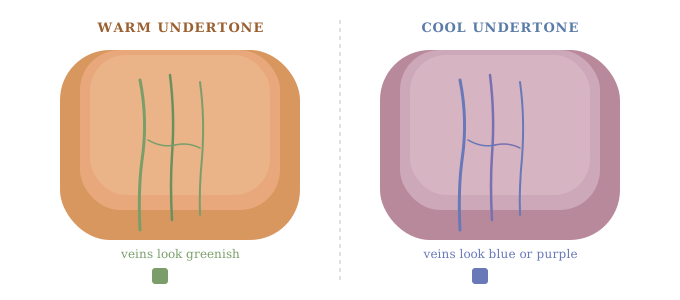
Look at the underside of your wrist in natural daylight — not yellow indoor lighting.
- Greenish veins → warm undertone. The natural yellow pigment in your skin mixes with the blue of your blood, making veins appear green.
- Blue or purple veins → cool undertone.
- Can’t tell — looks like both → neutral undertone.
This test works best on fair to medium skin. On very deep skin tones, vein color can be harder to read and is a less reliable signal.
2. The White Fabric Test
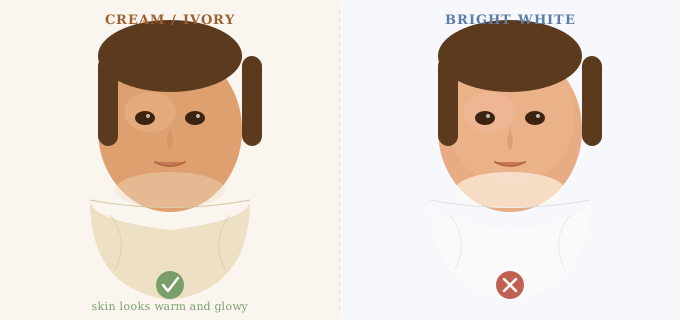
Hold a piece of pure bright white fabric next to your bare, makeup-free face — then swap it for an off-white or cream fabric.
- Pure white looks better (skin looks cleaner, more awake) → cool undertone.
- Cream or ivory looks better (skin looks warmer, less washed out) → warm undertone.
- No difference either way → neutral.
This is arguably the most practical at-home test because it mirrors exactly how clothing interacts with your skin in real life.
3. The Jewelry Test
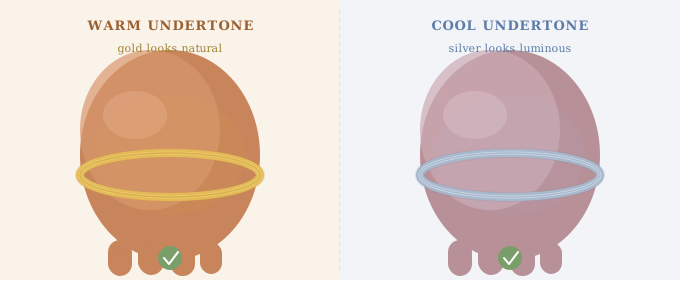
Think about which metal has always looked more natural on you — not which you prefer aesthetically.
- Silver looks like it belongs on your skin → cool undertone.
- Gold looks like it belongs on your skin → warm undertone.
- Both look equally natural → neutral.
Gold reflects warmth back onto warm skin; silver reflects a cool, luminous quality back onto cool skin. The metal either harmonizes or clashes — it’s usually obvious once you look for it.
4. The Sun Reaction Test
How does your skin typically behave in the sun?
- You tan easily, turning a golden or bronzy color → warm undertone.
- You burn before you tan, or your tan has a reddish quality → cool undertone.
- It depends — sometimes both → likely neutral.
This test is less reliable for deeper skin tones, where burning is uncommon regardless of undertone. Use it as one data point rather than a definitive answer.
5. The Draping Test (Most Accurate)
This is how professional color analysts actually confirm undertone. Hold different colored fabrics up to your bare face in sequence and watch your skin, not the fabric:
- Warm coral vs cool pink
- Warm golden yellow vs cool lemon yellow
- Orange-red vs blue-red
- Skin looks glowy, shadows lift, redness calms → that color’s temperature suits you.
- Skin looks sallow, washed out, or redness increases → opposite temperature.
You can do a simplified version with your own wardrobe. Pull out everything orange or mustard versus everything cobalt or fuchsia, and see which group photographs better on you consistently.
What Warm Undertone Actually Looks Like
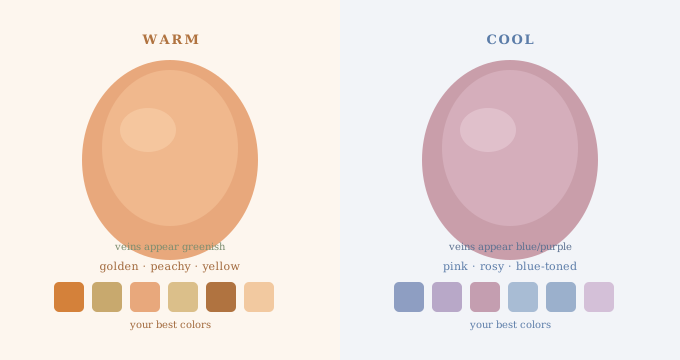
Warm undertones have a yellow, golden, or peachy quality beneath the skin. On lighter skin this might read as a creamy warmth. On medium skin it looks golden-olive. On deeper skin it appears rich and bronze.
Common misconception: Many people assume “warm” means tan. It doesn’t. You can be very fair and very warm. Think of someone pale with golden undertones — they respond beautifully to earthy colors but look washed out in cool icy shades.
What happens when warm undertones wear cool colors: The cool colors pull out the yellow in warm skin and make it look sallow or slightly greenish. The more saturated and cool the color (cobalt blue, magenta, icy pink), the more pronounced this effect.
Your best colors: Rich earthy greens, terracotta, camel, warm reds, golden yellows, peach, chocolate brown. These share the same yellow-golden base as your skin and create a harmonious, glowing result.
What Cool Undertone Actually Looks Like
Cool undertones have a pink, red, or bluish quality beneath the skin. On lighter skin this often reads as porcelain with visible pink or blue-red tones. On medium skin it can look neutral or slightly olive. On deeper skin it can appear blue-black or purplish-cool.
Common misconception: Cool undertones don’t always mean pink skin. Many cool-toned people have olive or neutral-looking surface skin but respond dramatically better to cool colors when tested by draping. The color analysis community calls this a “yellow overtone with a cool undertone” — it trips people up constantly and is the main cause of mistyping.
What happens when cool undertones wear warm colors: Warm colors reflect their golden-orange energy back onto cool skin, amplifying any natural redness or pinkness. The result looks flushed, blotchy, or unwell. Orange and mustard are the most notorious offenders.
Your best colors: Jewel tones — sapphire, emerald, amethyst — as well as rosy pinks, pure whites, cool grays, blue-reds, and berry shades. These share the same cool base and produce a luminous, crisp, healthy effect.
The Olive Skin Exception
Olive skin doesn’t fit neatly into warm or cool, which is why it causes more confusion than any other skin type in color analysis communities.
True olive skin has a greenish quality created by a blend of yellow (warm) and blue (cool) pigments — making it sit somewhere in the neutral-to-cool range rather than the warm range that people often assume. This is the most common mistyping mistake.
Many olive-toned people find that warm colors (terracotta, orange, mustard) actually bring out an unflattering yellow-green cast, while cooler, clearer colors make their skin look luminous. This is the opposite of what most general undertone guides predict.
The key is testing with actual fabric rather than relying on rules. Olive skin benefits from the draping test more than any other method — written guidelines simply don’t account for the complexity of the olive undertone mix.
If your color analysis results feel inconsistent, or multiple seasons seem to “fit,” olive is often the reason.
Undertone vs Skin Tone: Why People Confuse Them
Skin tone = how light or dark you are, determined by melanin. This changes with sun exposure, age, and season.
Skin undertone = the color cast beneath the surface, determined by your genetics. This never changes.
You can be: light + warm, light + cool, deep + warm, deep + cool — every combination exists across every ethnicity. The fashion and beauty industry conflates these constantly, which is why people end up with the wrong foundation for decades and wonder why their makeup never looks quite right.
The tests above measure undertone specifically. Your tan in August doesn’t change your undertone — it only changes your depth.
How Undertone Connects to Your Color Season
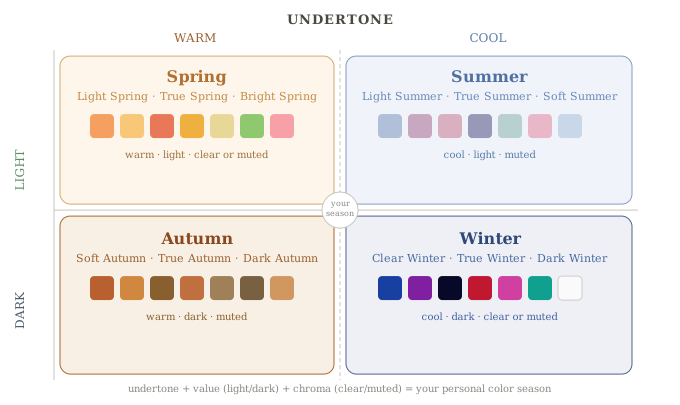
Once you know your undertone, you’re most of the way to knowing your personal color season. Color seasons are built on three characteristics: your undertone (warm or cool), your value (light or dark), and your chroma (clear/bright or muted/soft).
Here’s how undertone maps to each season family:
| Undertone + Value + Chroma | Your Season | Celebrity Examples |
|---|---|---|
| Warm + Light + Soft | Light Spring | Fair, delicate warm coloring |
| Warm + Light + Clear | Bright Spring | High contrast, warm and vivid |
| Warm + Medium + Soft | Soft Autumn | Muted, earthy, warm golden |
| Warm + Dark + Rich | Dark Autumn | Deep, warm, high-contrast |
| Cool + Light + Soft | Soft Summer | Muted, cool, delicate |
| Cool + Light + Clear | Light Summer | Fair, cool, soft contrast |
| Cool + Dark + Clear | Bright Winter | High contrast, cool, vivid |
| Cool + Dark + Deep | Dark Winter | Deep, cool, dramatic |
Undertone is the starting point, but your full season also depends on how light or dark you are and how clear or muted your natural coloring is. For a deeper explanation of the full system, read our guide: What Is Seasonal Color Analysis? The Complete Guide →
Not sure which season you are?
Upload a photo and ToneMatch will analyze your undertone, value, and chroma — and match you to your exact color season in under a minute.
Try Free Color Analysis →Warm vs Cool Undertone: Makeup Guide
Foundation
- Warm: Look for foundations described as “golden,” “yellow,” or “peach.” Avoid anything labeled “pink” or “rosy.”
- Cool: Look for foundations with pink or rosy descriptors. Avoid yellow-based formulas — they’ll make you look jaundiced.
- Quick test: Swatch on your jawline, not your hand. Blend slightly onto your neck. The right shade disappears; the wrong one creates a visible line.
Blush
- Warm: Peach, coral, terracotta, warm apricot.
- Cool: Soft pink, rose, berry, mauve.
Lip Color
- Warm: Orange-reds, warm nude-browns, corals, peachy pinks.
- Cool: Blue-reds (classic cool red), berry, plum, cool pink, rose.
Highlighter
- Warm: Gold, bronze, copper, warm champagne.
- Cool: Silver, pearl, icy pink, cool champagne.
Hair Color
- Warm: Golden blonde, caramel, warm auburn, chocolate brown with golden or red tones. Avoid ash.
- Cool: Ash blonde, platinum, cool brown, blue-black, or burgundy with blue/violet tones. Avoid golden or brassy tones.
Frequently Asked Questions
Can my undertone change if I get a tan?
No. Tanning changes your surface skin tone (more melanin), but your undertone is genetic and permanent. You may need a deeper foundation shade in summer, but if you’re cool-toned, you’ll always be cool-toned. The undertone doesn’t shift — only your depth does.
Can I have a warm undertone and light skin?
Yes. Undertone has nothing to do with how light or dark you are. Many fair-skinned people have warm undertones and look best in ivory, peach, and golden hues rather than bright white or pink. Skin depth and undertone are independent variables.
What if the tests give me conflicting results?
Focus on the draping test above all others — it shows a live skin reaction in real time and is how professional analysts confirm undertone. The vein test is the second most reliable. If you’re getting mixed signals across multiple tests, you’re likely neutral-leaning, which is an extremely common result and not a failure of the tests.
What is the most accurate undertone test?
The draping test — holding colored fabrics against your face and watching your skin’s reaction — is the most accurate method. It bypasses interpretation and shows directly which temperature improves or worsens your complexion. All other tests are useful shortcuts, but draping is the professional standard.
Is olive skin warm or cool undertone?
Usually neutral to cool, despite what most guides say. The greenish quality in olive skin comes from a mix of warm (yellow) and cool (blue) pigments — not from warmth alone. Most olive-toned people find they look better in clearer, cooler colors than in warm earthy ones, though this varies significantly by individual. Draping is especially important for olive skin.
What’s the difference between undertone and overtone?
Your overtone is the visible surface color of your skin — what people see first in a photograph or on the street. Your undertone is the deeper cast that influences how your skin responds to color. The two can be completely different: you can have a yellow overtone (surface appearance) with a cool undertone (depth), which is common in olive and many East Asian skin types and causes frequent mistyping.
Does undertone affect hair color recommendations?
Yes, significantly. Cool undertones work best with ash, platinum, and cool-brown shades — golden or brassy tones will clash with the pink/blue quality of the skin. Warm undertones work best with golden, caramel, and auburn tones — ash colors will make warm skin look dull or gray. Getting this wrong is why some people feel “off” after a dye job even if the color itself looks good in isolation.
The Bottom Line
Warm and cool undertones are fundamentally different skin characteristics — not just a spectrum of the same thing. Warm undertones have a yellow-golden base and thrive in earthy, rich, sun-kissed colors. Cool undertones have a pink-blue base and come alive in jewel tones, pure whites, and blue-based hues.
The fastest way to confirm your undertone is the white fabric test paired with draping. Stop relying on veins alone — they’re helpful but not definitive, especially for deeper or olive skin tones.
Once you know your undertone, the next step is finding your full personal color season, which accounts for your value (light vs dark) and chroma (clear vs muted) alongside your undertone. ToneMatch can analyze your photo and determine your exact color season in under a minute — free.
Find your color season — free
Upload a photo and get your undertone, season, and a full palette recommendation. No sign-up required to start.
Start Free Analysis →